 AH
 OM
 MB
 WW
 CH
 BN
 MT
 MH
 CB
 TR
 OKC
 SA
 OCT
 SAS
 P7
 NYK
 PHI
 NY
 BC
 DP
 BOS
 DET
 WC
 SF4
 CLE
 TB
 ATL
 GS
 AD
 GSV
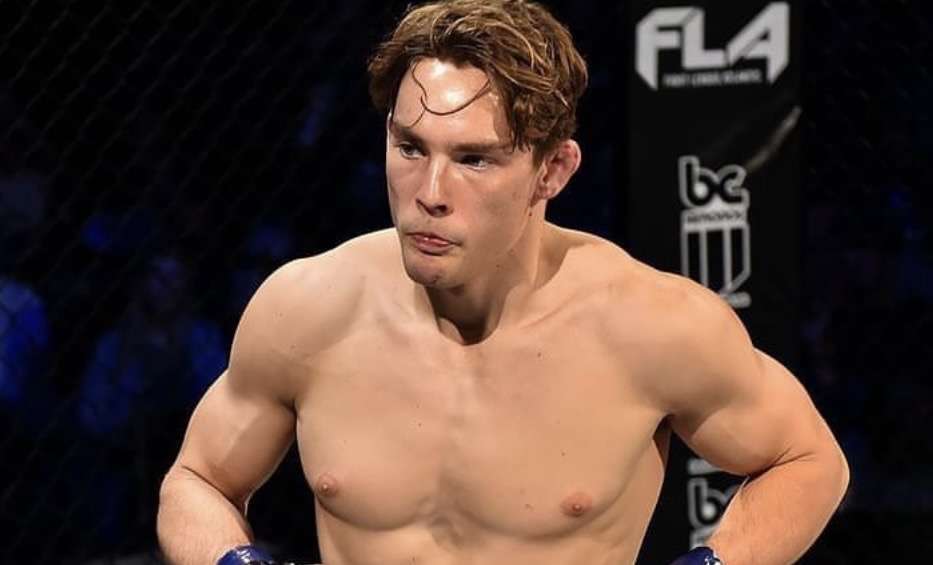
Who Is Jack Jenkins? The Bacchus Marsh Fighter Whose Leg Kicks Became His Calling Card
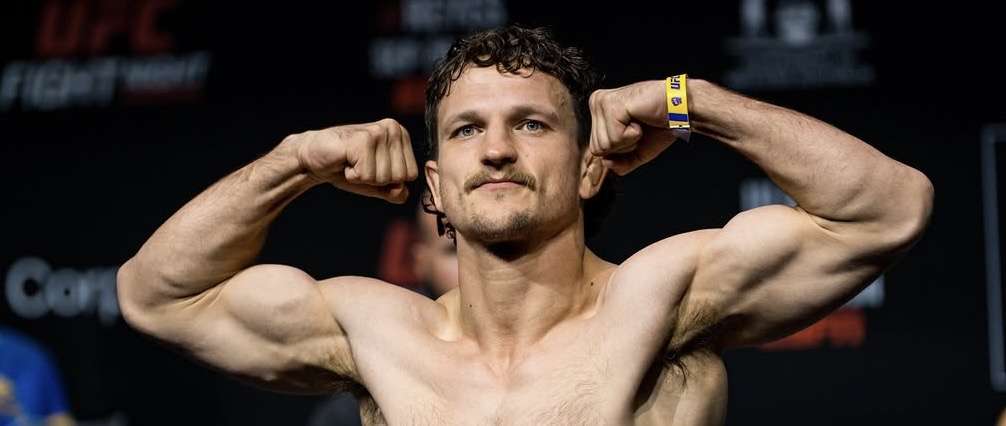
Who is Jack Jenkins? The Australian UFC featherweight known as “Phar” built his career from Bacchus Marsh with an unusual combination of vicious low kicks, thoughtful fight IQ and an almost stubborn refusal to make excuses when things go wrong.
His older brother helped introduce him to fighting and taught him how to throw a leg kick. That single weapon eventually became Jenkins’ physical calling card.
However, the road to the UFC was anything but smooth.
Jenkins lost consecutive professional fights early in his career. Later, he rebuilt himself, became an Australian regional champion, fought his way onto Dana White’s Contender Series and finally reached the UFC.
Serious injuries then tested him again.
One damaged his elbow badly enough that Jenkins briefly wondered whether his fighting career could be over. Another left him in intensive care with a fractured thyroid cartilage and swelling in his throat.
Still, Jenkins returned.
That ability to keep moving forward may explain his career better than any knockout statistic.
Jack Jenkins Fighter Information
| Stats | Details |
|---|---|
| Full Name | Jack Jenkins |
| Nickname | Phar |
| Born | 1993 |
| Birthplace | Australia |
| Nationality | Australian |
| Heritage | Not publicly stated |
| Height | 5’7″ (170 cm) |
| Reach | 68 in (173 cm) |
| Weight Class | Featherweight |
| Record | 14-4-0 |
| Team | Absolute MMA |
| Head Coach | Not publicly stated in the supplied material |
| Stance | Switch |
| @pharjack |
Who Is Jack Jenkins?
Jack Jenkins is an Australian professional mixed martial artist who competes at featherweight.
He is closely associated with Bacchus Marsh, Victoria, and trains through the Absolute MMA system in Melbourne.
Although Jenkins has developed into a complete mixed martial artist, kickboxing formed a major part of his early identity.
His low kick, in particular, became one of his most recognizable weapons.
Meanwhile, his UFC career has shown another side of him: an ability to survive setbacks without pretending they did not happen.
Why Is Jack Jenkins Called “Phar”?
Jenkins fights under the nickname “Phar.”
However, the supplied interviews and fighter records do not clearly establish the exact origin of the nickname.
It has nevertheless become deeply connected to his public identity.
His Instagram handle is @pharjack, and Australian MMA interviews frequently refer to him as “Phar Jack.”
Without a direct explanation from Jenkins, though, the exact nickname origin is best left unstated.
Where Is Jack Jenkins From?
Jenkins is Australian and strongly identifies with Bacchus Marsh, Victoria.
His social media biography even describes him simply as a “Bacchus Marsh Boy.”
That local identity matters to him.
Before Jenkins became widely known through the UFC, much of his support was concentrated around Bacchus Marsh. Local fans travelled to his regional fights, bought tickets and helped create an atmosphere around his early career.
At some events, Jenkins recalled that a large section of the crowd would arrive primarily for his fight and then leave afterward.
Rather than immediately trying to become internationally famous, Jenkins has said fighters should first become important to their own community.
For him, that community was Bacchus Marsh.
Why Is Bacchus Marsh So Important to Jack Jenkins?
Jenkins has deliberately built his identity around where he came from.
He has explained that he wanted to establish himself first as someone Bacchus Marsh could claim as its own.
From there, the idea was to grow outward.
First Bacchus Marsh.
Then Melbourne.
Then Victoria.
Eventually, Australia.
That approach is unusual because Jenkins openly thinks about fighting as both a sport and a public career.
Yet the local connection is not manufactured.
He spent years travelling from Bacchus Marsh to train, and at one point the distance created a very practical problem.
Did Jack Jenkins Really Sleep at the Gym During Fight Camps?
Yes.
Jenkins has said there were periods during earlier fight camps when travelling back to Bacchus Marsh was impractical.
Because he could not afford to live close to the gym at the time, he sometimes slept on the gym floor instead.
That experience stayed with him.
Even after his circumstances improved, Jenkins said he sometimes found himself uncomfortable with becoming too comfortable.
During camps, he prefers an environment that still feels like work.
In his mind, fighting requires the ability to exist in uncomfortable places.
How Did Jack Jenkins Get Into Fighting?
Jenkins’ brother played an important role.
According to Jenkins, watching his brother compete in kickboxing helped pull him toward fighting.
His brother also directly influenced his striking development.
Most importantly, he taught Jenkins how to throw the low kick that would later become one of his most dangerous weapons.
Eventually, Jenkins needed more than kickboxing.
As his interest shifted toward MMA, he began seeking out wrestling and ground training as well.
Who Taught Jack Jenkins His Leg Kick?
Jenkins credits his brother with first showing him how to throw the technique.
The ability came naturally.
Jenkins describes himself as relatively short and explosive, and coaches recognized early that he could generate unusual force with his legs.
While his brother possessed exceptional punching power, Jenkins realized that his own natural “X-factor” was different.
It was the kick.
More specifically, it was the low kick.
Why Are Jack Jenkins’ Leg Kicks So Dangerous?
Jenkins can generate substantial power without making the attack obvious.
That matters because powerful kicks are far easier to defend when an opponent can see them coming.
Jenkins has explained that simply kicking a heavy bag hard is not enough.
The real skill comes from timing the strike and disguising it until the moment it lands.
Therefore, much of his development focused on learning how to set opponents up rather than simply trying to kick harder.
The result became one of Australian MMA’s more recognizable calf-kicking games.
Has Jack Jenkins Broken Opponents’ Legs With Kicks?
Jenkins developed a reputation for causing significant damage with low kicks.
In one interview, he discussed several opponents suffering serious leg damage across a relatively short run of fights.
Rather than treating those moments as accidents, Jenkins connected them directly to the low kick he had developed since his early kickboxing days.
However, the more important point for his long-term profile is not the exact number.
It is that leg kicking became the signature weapon around which Jenkins built much of his striking game.
Is Jack Jenkins a Kickboxer?
Kickboxing is a major part of his foundation.
In fact, Jenkins has said that when Dana White watched his Contender Series performance, White mostly saw wrestling.
That created an unusual situation.
Jenkins had spent years developing as a dangerous kickboxer, yet the performance that earned him his UFC opportunity revolved heavily around grappling.
Behind the scenes, UFC matchmakers reportedly explained that Jenkins had more striking ability than the fight alone suggested.
That broader skill set helped his case.
How Did Jack Jenkins Add Grappling to His Game?
As Jenkins became more serious about MMA, he realized kickboxing alone would not be enough.
His brother helped locate a gym in Melton where Jenkins could begin learning the ground game.
There he met coaches Heath and Kelly, and Jenkins says Heath recognized his potential almost immediately.
Within only a handful of lessons, Heath told him that reaching the UFC was possible.
At the time, Jenkins was still extremely early in his MMA education.
Nevertheless, that prediction eventually proved correct.
Did Someone Predict Jack Jenkins Would Reach the UFC?
Yes.
Jenkins has recalled that one of his early coaches told him within his first several lessons that there was effectively no ceiling on what he could achieve.
The prediction sounds remarkable in hindsight because Jenkins still had enormous gaps in his grappling knowledge.
Yet his athletic ability and aptitude were already visible.
Years later, Jenkins did reach the UFC.
There is another version of that story involving a UFC legend.
What Is Jack Jenkins’ Forrest Griffin Story?
When Jenkins was around 15 or 16 years old, his coach helped organize a seminar with former UFC champion Forrest Griffin.
Jenkins attended and took a photo with Griffin.
Then he told him something ambitious.
He was going to fight in the UFC one day.
Years passed.
Before Jenkins competed on Dana White’s Contender Series, he found the old photograph and contacted Griffin again.
Jenkins reminded him of the promise and explained that he was not in the UFC yet, but planned to earn his contract.
After Jenkins succeeded, Griffin helped welcome him at UFC headquarters.
A teenage prediction had come full circle.
When Did Jack Jenkins Make His Professional MMA Debut?
Jenkins made his professional MMA debut in 2016.
He defeated Alan Hartley by first-round triangle choke.
That result is interesting in hindsight because Jenkins would later become much better known for his striking, particularly his kicks.
His first professional victory, however, came by submission.
Did Jack Jenkins Struggle Early in His Career?
Yes.
Jenkins did not build his UFC career behind an unbeaten record.
After starting his professional career with several victories, he suffered back-to-back losses.
Jesse Medina submitted him by armbar in 2017.
Sang Won Kim then defeated him by rear-naked choke in 2018.
For some prospects, consecutive defeats early in a career can completely change the trajectory.
Jenkins responded differently.
Why Did Jack Jenkins Keep Fighting After Two Straight Losses?
Because he remained convinced that he was good enough.
Jenkins has spoken openly about reaching that point in his early career.
After losing twice, he essentially decided that the defeats did not alter his belief in his ability.
He still thought he possessed the talent and work ethic required to reach the highest level.
More importantly, he kept going.
That decision became one of the most important turning points in his career.
What Does Jack Jenkins Think About Losing?
Jenkins has a particularly direct philosophy.
A loss is a loss.
He dislikes explanations designed to protect a fighter’s ego after defeat.
In an interview, Jenkins discussed seeing fighters blame judges, injuries or individual moments rather than simply admitting that an opponent beat them.
His view is that excuses prevent improvement.
If you lose, accept responsibility.
Then identify what needs fixing and continue.
That philosophy became especially important after one of the strangest defeats of his UFC career.
What Happened to Jack Jenkins’ Elbow?
Jenkins suffered a serious arm injury during his fight with Jose Mariscal.
The bout ended when his arm was badly injured during a grappling exchange.
For a short period afterward, Jenkins did not know what his recovery would look like.
He feared that his elbow might never fully straighten again.
For a striker, that possibility carried obvious consequences.
Reduced extension could affect his reach and his ability to throw his right hand.
Did Jack Jenkins Think His Career Was Over After the Elbow Injury?
For roughly two days, Jenkins had to consider that possibility.
Before speaking with his surgeon, he was forced to imagine a future where the elbow never returned to normal.
Rather than making him more cautious, that experience had the opposite effect.
Jenkins decided that if his body allowed him to compete again, he wanted to stop leaving pieces of his game unused.
He would rather take risks and show everything he could do than compete tentatively because he was afraid of losing.
Once doctors told him a full recovery was realistic, the process became simple in his mind.
Rehab.
Recover.
Return.
Why Does Jack Jenkins Refuse to Use His Injury as an Excuse?
Jenkins is unusually strict about this point.
Even when discussing the Mariscal fight, he rejects the idea that he should mentally rewrite the result because he had been performing well before the injury.
His reasoning is straightforward.
A fighter can be winning until the instant he gets knocked out, submitted or injured.
What happened before the ending does not erase what happened at the ending.
Jenkins believes that accepting losses honestly is necessary for growth.
Otherwise, a fighter can convince himself that nothing needs to change.
How Did Jack Jenkins Return From His Elbow Injury?
After completing rehabilitation, Jenkins returned against Herbert Burns.
He won by TKO after Burns retired early in the third round.
For Jenkins, the bout carried significance beyond the official result.
He was able to use the previously injured arm effectively.
That provided psychological confirmation that the injury had not taken his career away.
What Happened to Jack Jenkins’ Throat?
Jenkins later endured a far more frightening medical situation.
After his fight with Gabriel Santos, Jenkins revealed that he had cracked his thyroid cartilage.
His throat then began swelling.
Doctors were concerned enough that he spent several days in an intensive care unit under constant monitoring.
This was no longer simply about when he could fight again.
There was concern about his immediate health.
Was Jack Jenkins in Intensive Care?
Yes.
Jenkins described spending a couple of days in the ICU connected to monitoring equipment.
The swelling around the damaged thyroid cartilage created enough concern that doctors closely watched his condition.
He later described the experience with one word: scary.
The episode also changed the way Jenkins thought about mortality.
How Did the Throat Injury Change Jack Jenkins?
Jenkins said the experience forced a level of self-reflection he had never encountered before.
Fighters understand intellectually that serious consequences are possible.
However, being hospitalized under close monitoring made that possibility much more real.
Jenkins later described it almost as a transition in perspective.
Until a person is genuinely confronted with the possibility that something could go badly wrong, mortality can remain abstract.
For Jenkins, it suddenly was not abstract anymore.
Still, he decided to fight again.
Was Jack Jenkins Afraid to Return After the Throat Injury?
Yes.
Jenkins openly acknowledged that returning was difficult.
However, instead of trying to solve the entire problem at once, he concentrated on going through the process day by day.
Having a strong team around him helped.
Eventually, he pushed himself back into competition.
Jenkins later described making that return as one of the best decisions he had made.
What Is Jack Jenkins’ Fighting Style?
Jenkins is a well-rounded featherweight with a kickboxing base, dangerous low kicks and an increasingly developed grappling game.
He can fight from both stances, which matches ESPN’s listing of him as a switch-stance fighter.
His striking is built around timing rather than reckless exchanges.
Low kicks attack the opponent’s base.
Punches and knees become available when the opponent reacts.
Meanwhile, Jenkins can wrestle when the matchup requires it.
That adaptability was particularly clear on Contender Series.
Is Jack Jenkins a Switch-Stance Fighter?
Yes.
ESPN lists Jenkins as a switch-stance fighter.
That fits the way he describes his striking.
He can change stance while working at range, which gives him additional ways to disguise his kicks and manage distance.
Combined with his low-kick timing, stance changes can make it harder for opponents to predict when the attack is coming.
How Did Jack Jenkins Get on Dana White’s Contender Series?
By the time Jenkins reached Contender Series, he had already accumulated years of regional experience.
His path was not based on being an undefeated prospect.
Instead, he rebuilt after losses, kept winning and developed a strong Australian regional résumé.
Jenkins eventually reached the show with a record that reflected both success and adversity.
That experience mattered when his UFC opportunity finally arrived.
How Did Jack Jenkins Win on Dana White’s Contender Series?
Jenkins faced Emiliano Linares.
Rather than primarily showing the striking for which he was known, Jenkins recognized that grappling represented the cleaner path to victory.
He repeatedly took Linares down and wore him out.
Eventually, Jenkins finished him with punches late in the third round.
The victory earned him a UFC contract.
However, it also produced one of the more amusing stories of his career.
Why Did Dana White Call Jack Jenkins a “One-Trick Pony”?
After watching the Contender Series fight, Dana White had primarily seen Jenkins wrestle.
Because White judges what happens in the cage rather than studying every prospect’s entire previous career, Jenkins’ broader striking background was not immediately obvious.
Jenkins later explained that UFC matchmakers told White he was actually an accomplished kickboxer.
That helped provide context for the performance.
Rather than being a one-dimensional wrestler, Jenkins had simply chosen the safest strategy for that specific opponent.
Who Is “Ben Pay The Man” in Jack Jenkins’ Story?
One of the strangest parts of Jenkins’ Contender Series preparation came from a stranger online.
A fan Jenkins knew as Ben Pay The Man contacted him through Instagram after studying his opponent.
The fan had noticed specific tendencies and offered tactical information.
Jenkins took the advice seriously.
Later, Ben appeared again before Jenkins’ UFC debut and offered another observation about clinch behavior.
Jenkins then used that information in the fight, attacking with knees when the predicted situation appeared.
Their unlikely connection became a viral story.
Jenkins later arranged tickets for Ben and his father for his UFC debut, allowing them to finally meet in person.
How Did Jack Jenkins Perform in His UFC Debut?
Jenkins made his UFC debut in Australia against Don Shainis.
He won by unanimous decision.
The setting made the victory particularly meaningful.
Jenkins had spent years trying to reach the organization, and his first UFC fight happened in front of an Australian crowd.
He later described the walkout experience as something almost impossible to replicate in ordinary life.
Why Was Jack Jenkins’ UFC Debut So Emotional?
The UFC had been away from Australia during a period when Jenkins was waiting for his opportunity.
He believed he had been ready for that level long before the opportunity finally arrived.
Therefore, when the promotion returned and Jenkins was given a place on the card, the moment represented years of waiting.
Walking into the arena surrounded by an Australian crowd became something he said he would remember for the rest of his life.
What Does Jack Jenkins Think Fighters Need to Reach the UFC?
Jenkins’ answer is less glamorous than most motivational speeches.
They need to keep going.
After spending years around Australia’s regional MMA circuit, he noticed that talented fighters took many different routes.
Some reached major promotions unbeaten.
Others accumulated losses first.
What separated many of those who eventually succeeded, according to Jenkins, was simply that they stayed in the sport long enough to receive another opportunity.
He reached his own UFC chance after already experiencing professional defeats.
Why Does Jack Jenkins Think Fight IQ Matters?
Jenkins views MMA almost as rapid problem solving.
Physical ability and discipline are important.
However, he believes a fighter also needs a good brain.
Inside a fight, an athlete constantly receives information.
How does the opponent react to a feint?
Where does his weight move?
What happens after a particular combination?
Jenkins believes elite fighters must absorb that information and solve small problems in fractions of a second.
That analytical approach fits his reputation as one of the more cerebral Australian fighters.
Does Jack Jenkins Study His Own Performances?
Yes.
In fact, he jokes about enjoying edits and highlight videos of himself.
Jenkins once called it a “toxic trait” that he genuinely enjoys watching fan-made edits of his fights.
The detail is funny, but it also fits his personality.
He thinks deeply about his performances and how they look.
At the same time, he is comfortable admitting that he enjoys the spectacle of fighting.
What Does Jack Jenkins Think About His Own Potential?
Jenkins is highly self-critical.
Even after several UFC appearances, he said he did not believe he had produced anything better than roughly a “B+” version of what he can actually do.
His goal is to close the gap between what happens in training and what appears under the lights.
That view is important because Jenkins does not see his established UFC career as evidence that he has already reached his ceiling.
Instead, he thinks much of his best work has yet to appear in competition.
Where Does Jack Jenkins Train?
Jenkins is associated with Absolute MMA in Melbourne.
However, his training structure is more distributed than simply attending one class at one gym.
He has described training different parts of his game with specialist coaches.
Andy has worked with him for years on striking.
Simon handles much of his MMA and grappling work.
For specialist jiu-jitsu, Jenkins has also trained with Lachlan Giles in St Kilda.
Who Is Jack Jenkins’ Head Coach?
The supplied material does not identify one individual with the exact, definitive title of head coach.
Jenkins describes Simon as his MMA coach and primary grappling coach, while Andy has been his longtime striking coach.
He also uses specialist jiu-jitsu coaching.
Therefore, this profile does not force one coach into a title Jenkins himself has not clearly assigned.
Is Jack Jenkins a Coach Too?
Yes.
Jenkins has discussed coaching other fighters and helping younger athletes.
As his own career developed, he increasingly became one of the experienced voices inside his gym.
Younger teammates regularly approach him with questions.
Jenkins takes pride in being able to give advice not only about fighting but also about life around the sport.
However, he does not view himself as the only leader at Absolute MMA.
He has specifically praised teammates who lead in quieter ways, whether through example, consistency or spending time developing younger fighters.
What Kind of Leader Is Jack Jenkins?
A loud one.
Jenkins describes himself as someone who communicates constantly during training.
He will correct details, make suggestions and speak directly to younger fighters.
That style makes him an obvious leadership presence.
Still, he recognizes that leadership can look different.
Some teammates lead primarily by how consistently they train.
Others invest time in younger athletes away from the main sessions.
Jenkins sees his own role as part of that broader gym culture.
What Does Jack Jenkins Do Outside Fighting?
Golf is one of Jenkins’ recurring interests.
He has discussed playing golf during time away from training and has become associated with his golf swing in Australian media appearances.
He also runs frequently.
Those runs sometimes serve a physical purpose, but they can also become psychological preparation.
Jenkins has described running around Melbourne at night, occasionally near the sporting precinct around Rod Laver Arena, imagining eventually fighting in major venues there.
Sometimes he runs without headphones to clear his mind.
Other nights, he embraces the atmosphere and uses music to build himself into a competitive mindset.
Does Jack Jenkins Experience a Post-Fight Come Down?
He has spoken about it openly.
After some fights, Jenkins experienced a dramatic drop in energy once the build-up was over.
Training camps create weeks of structure, pressure and adrenaline.
Then the fight ends.
Suddenly, ordinary tasks can feel strangely difficult.
Jenkins described periods when even simple things such as washing clothes or cleaning the car felt harder to motivate himself to do.
He compared the experience with what other fighters have described as a post-fight emotional crash.
Does Jack Jenkins Have a Girlfriend?
Jenkins has publicly mentioned having a girlfriend in interviews.
However, the supplied material does not establish enough information to make her a significant part of this profile.
Therefore, her name and other personal details are not included.
What Does Jack Jenkins Think Is the Most Important Trait for Success?
Resilience.
When asked to choose between drive, resilience and ambition, Jenkins leaned toward resilience.
His reasoning matched his own career.
Ambition matters.
Drive matters.
Yet neither helps much if a person stops the first time something goes wrong.
Jenkins believes struggle is effectively guaranteed.
Therefore, the ability to absorb setbacks and continue becomes the quality that keeps everything else alive.
Why Is Resilience Such a Big Part of Jack Jenkins’ Story?
Because his career repeatedly forced him to use it.
Two consecutive professional losses.
Years spent fighting through the Australian regional circuit.
Sleeping on the gym floor during camps.
Waiting for a UFC opportunity.
A catastrophic elbow injury.
Rehabilitation.
Another serious injury, this time involving his throat.
Intensive care.
Then another return.
Jenkins does not treat resilience as a motivational slogan.
His career repeatedly required it.
What Makes Jack Jenkins Different?
The leg kicks attract attention first.
They should.
Jenkins can generate frightening power from a compact frame, and the low kick has followed him from his earliest days learning from his brother into the UFC.
But that is only the obvious part of the story.
Jenkins is also unusually analytical.
He talks about fighting as processing information in milliseconds.
He plans his career in stages.
He studies what separates regional fighters who make it from those who disappear.
At the same time, he remains attached to the place where everything started.
Bacchus Marsh supported him before the UFC knew his name.
During difficult camps, he sometimes slept at the gym rather than make the trip home.
As a teenager, he stood beside Forrest Griffin and declared that he would reach the UFC someday.
Then he actually did.
The most revealing part, though, may be how Jenkins handles the moments when the story goes wrong.
He does not want an asterisk beside a loss.
An injury happened?
That is fighting.
An opponent beat him?
Accept it.
Fix the problem.
Continue.
That attitude carried him through two straight losses early in his career, an elbow injury that briefly threatened his future and a damaged throat serious enough to put him in intensive care.
For Jack Jenkins, resilience is not separate from fighting.
It may be the skill underneath everything else.
Jack Jenkins FAQ
Who is Jack Jenkins?
Jack Jenkins is an Australian professional mixed martial artist who competes in the UFC featherweight division.
What is Jack Jenkins’ nickname?
His nickname is “Phar.”
Why is Jack Jenkins called Phar?
The exact origin of the nickname is not clearly explained in the supplied material.
When was Jack Jenkins born?
Jenkins was born in 1993. The supplied databases conflict on his exact month and day, so this profile avoids presenting an uncertain date as fact.
Where is Jack Jenkins from?
He is Australian and strongly identifies with Bacchus Marsh, Victoria.
What nationality is Jack Jenkins?
He is Australian.
What is Jack Jenkins’ heritage?
His specific heritage is not publicly stated in the supplied material.
How tall is Jack Jenkins?
Jenkins is listed at 5’7″ (170 cm).
What is Jack Jenkins’ reach?
His listed reach is 68 inches (173 cm).
What weight class does Jack Jenkins fight in?
He competes at featherweight.
What is Jack Jenkins’ professional MMA record?
His supplied professional MMA record is 14-4-0.
What stance does Jack Jenkins use?
ESPN lists Jenkins as a switch-stance fighter.
What is Jack Jenkins’ fighting style?
Jenkins is a kickboxing-based mixed martial artist known especially for powerful low kicks, while also possessing wrestling and submission skills.
Why are Jack Jenkins’ leg kicks famous?
Low kicks have been one of Jenkins’ most dangerous weapons since his early kickboxing development. He can generate significant power without heavily telegraphing the strike.
Who taught Jack Jenkins to leg kick?
Jenkins has credited his brother with first teaching him how to throw the technique.
Did Jack Jenkins’ brother get him into fighting?
His brother played a major role in introducing Jenkins to kickboxing and combat sports.
Did Jack Jenkins sleep at his gym?
Yes. Jenkins has said that during earlier fight camps he sometimes slept on the gym floor because travelling back to Bacchus Marsh was impractical and living near the gym was not yet an option.
Did Jack Jenkins meet Forrest Griffin as a teenager?
Yes. Jenkins attended a Forrest Griffin seminar when he was around 15 or 16 and told Griffin that he would eventually reach the UFC.
Did Jack Jenkins contact Forrest Griffin years later?
Yes. Before Contender Series, Jenkins contacted Griffin again with their old photo and reminded him of the prediction.
When did Jack Jenkins make his professional MMA debut?
He made his professional debut in 2016.
Did Jack Jenkins lose two fights in a row?
Yes. Jenkins suffered consecutive professional defeats in 2017 and 2018 before rebuilding his career.
How did Jack Jenkins reach the UFC?
He earned his UFC contract after defeating Emiliano Linares by late third-round TKO on Dana White’s Contender Series.
Why did Jack Jenkins wrestle so much on Contender Series?
Jenkins believed grappling was the clearest tactical advantage against Linares, so he attacked the opponent’s weaker area instead of showcasing his kickboxing unnecessarily.
Who is Ben Pay The Man?
“Ben Pay The Man” is a fan who contacted Jenkins online with detailed observations about his opponents. Some of the advice became part of Jenkins’ fight preparation.
Did Jack Jenkins win his UFC debut?
Yes. He defeated Don Shainis by unanimous decision.
What happened to Jack Jenkins’ elbow?
Jenkins suffered a serious elbow injury during his UFC fight with Jose Mariscal.
Did Jack Jenkins think the elbow injury could end his career?
For a short period, he feared he might permanently lose full extension in the arm, which could have affected his striking.
Did Jack Jenkins make a full comeback from the elbow injury?
Yes. He completed rehabilitation and returned to competition.
What happened to Jack Jenkins’ throat?
Jenkins later revealed that he fractured his thyroid cartilage and developed dangerous swelling in his throat after a fight.
Was Jack Jenkins in intensive care?
Yes. Jenkins said he spent several days in the ICU under close medical monitoring.
Did Jack Jenkins return to fighting after the throat injury?
Yes.
Where does Jack Jenkins train?
He is affiliated with Absolute MMA in Melbourne.
Who is Jack Jenkins’ head coach?
No single definitive head coach is established in the supplied material. Jenkins has described Simon as his MMA and grappling coach and Andy as his longtime striking coach.
Does Jack Jenkins train jiu-jitsu with Lachlan Giles?
Jenkins has said he goes to St Kilda for specialist jiu-jitsu work with Lachlan Giles.
Does Jack Jenkins coach other fighters?
Yes. Jenkins has discussed coaching and mentoring younger fighters.
What does Jack Jenkins think about excuses after losing?
He strongly believes fighters should accept responsibility for defeats rather than convincing themselves that losses do not count because of injuries, judging or other circumstances.
What is Jack Jenkins’ most important trait for success?
Jenkins has identified resilience as the trait that resonates most with his own career.
Does Jack Jenkins play golf?
Yes. Golf is one of the hobbies he has publicly discussed outside fighting.
Does Jack Jenkins have a girlfriend?
He has publicly referred to a girlfriend, although the supplied material does not provide enough information to include additional personal details.
What is Jack Jenkins’ Instagram?
Jack Jenkins can be found on Instagram at @pharjack.